Press to Impress
The Ironing Trick That Instantly Upgrades Your Sewing There’s a silent hero in every well-sewn garment, and it’s not the machine, the fabric, or even the hands that stitched it. It’s the iron…
For centuries, wool has been one of the most treasured natural fibers in clothing and textiles. Known for its warmth, durability, and versatility, wool has played a crucial role in fashion, industry, and culture. From ancient civilizations to modern high fashion, this fiber continues to be a staple in wardrobes around the world.
The history of wool dates back thousands of years. Evidence suggests that sheep were domesticated as early as 10,000 BCE in Mesopotamia, where early civilizations used their woolly coats for warmth and protection. By 3,000 BCE, the Babylonians had developed sophisticated techniques for spinning and weaving wool, establishing an industry that would spread across Europe and Asia.
In medieval Europe, wool became one of the most valuable commodities, fueling the economies of countries such as England and Spain. Wool trade brought immense wealth, and many European cities flourished due to its production and export. In the 16th and 17th centuries, Spain’s Merino sheep were highly sought after for their fine, soft wool, which was reserved for royalty and the wealthy elite.
The Industrial Revolution of the 18th and 19th centuries transformed wool production, introducing mechanical looms and spinning machines that increased efficiency and accessibility. By the early 20th century, wool had become an essential fabric in both everyday clothing and military uniforms, prized for its insulating properties and durability.
Despite the rise of synthetic fibers, wool remains a favorite in the fashion industry. Designers appreciate its natural elegance and versatility, incorporating it into everything from classic suits to contemporary streetwear.
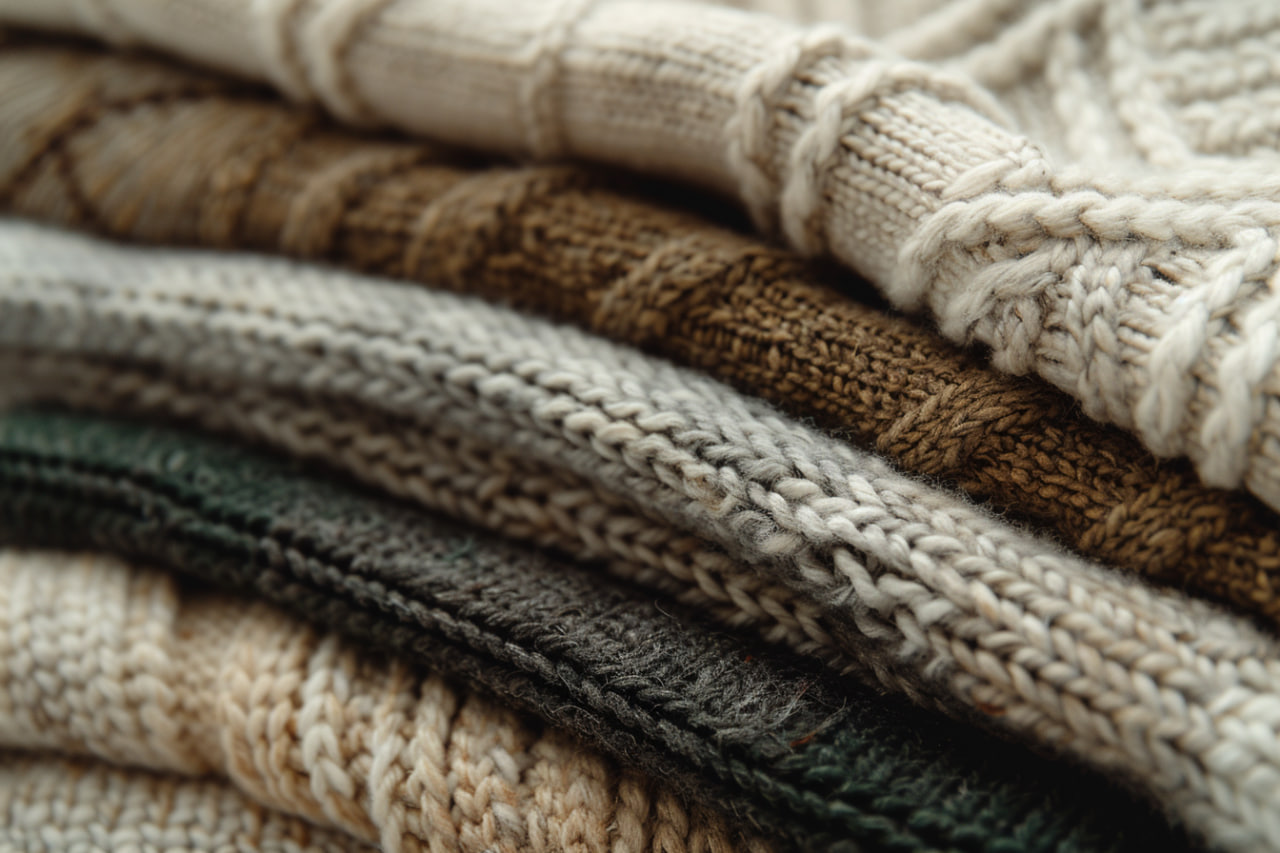
One of wool’s greatest strengths is its ability to provide warmth while remaining breathable. Unlike synthetic fibers, wool naturally regulates body temperature, keeping wearers warm in the winter and cool in the summer. It is also moisture-wicking, drawing sweat away from the skin, which makes it ideal for activewear and outdoor clothing. Merino wool, in particular, has gained popularity for its softness and lightweight properties, making it comfortable to wear directly against the skin. Unlike traditional coarse wool, Merino wool does not itch and is often used in base layers, socks, and everyday knitwear. Wool is also highly durable, capable of retaining its shape even after years of wear. Its natural elasticity allows garments to stretch and move with the body, making it a preferred choice for tailored clothing and performance wear. Additionally, wool is odor-resistant and antimicrobial, making it an excellent fabric for long-term use.
Wool is used in a variety of clothing and textile designs, each serving a different purpose:
As sustainability becomes a primary concern in fashion, wool is gaining renewed interest for its biodegradable and renewable qualities. Organizations like The Woolmark Company and Sustainable Wool Initiatives are promoting responsible wool production, ensuring ethical treatment of sheep and environmentally friendly processing methods.Additionally, new technologies are enhancing wool’s capabilities. Innovations in wool treatment allow for machine-washable and shrink-resistant wool garments, making them more practical for everyday wear. Blended fabrics, combining wool with cashmere, silk, or synthetic fibers, are also creating softer, more versatile textiles.
Wool has remained a staple in fashion for thousands of years, proving its unmatched combination of comfort, durability, and elegance. As Coco Chanel once famously said, “Fashion fades, only style remains the same.” Wool exemplifies this sentiment—whether in a classic coat, a cozy sweater, or a high-fashion ensemble, it continues to define timeless style.
With its rich history and promising future, wool is more than just a fabric—it is a testament to the enduring relationship between fashion and nature. As consumers seek both comfort and sustainability, wool will undoubtedly remain a cherished material for generations to come.

The Ironing Trick That Instantly Upgrades Your Sewing There’s a silent hero in every well-sewn garment, and it’s not the machine, the fabric, or even the hands that stitched it. It’s the iron…

Pajamas as Outerwear: The Rise of Relaxed Luxury in Fashion
Pajamas have long been associated with comfort, relaxation, and bedtime rituals.